
Fund for Latino Scholarship Recipients
APSA awarded the following individuals and institutions the 2026 Fund for Latino Scholarship award:
- Katherine Mann, Washington and Lee University
- Sashi Jurez-Galindo, University of Maryland, College Park
- Francy Luna Diaz, University of Michigan
- Giovanna Itzel, University of California, Irvine
- Sebastean Pujols, The New School for Social Research
- Niranjan Jose, University of St. Gallen
- Máximo Navarro, Cornell University
- Chris Flores, Stanford University

Katherine (Katie) Mann is a Visiting Assistant Professor of Politics at Washington and Lee University. Her research explores questions at the intersection of peace and conflict, international development, democracy, and gender politics. She has conducted extensive fieldwork in Colombia, studying how rebel organizations govern gender relations and sexual violence within their ranks and among civilian populations under their control. Building on this work, she is developing her second book project, “Grammars of Gendered Violence and Control in Colombia,” which examines how and why rebel organizations regulate gender-based violence and broader gender relations during civil war. Her first book, Aiding Empowerment: Democracy Promotion and Gender Equality in Politics (Oxford University Press, 2024, with Saskia Brechenmacher), analyzes international aid for women’s empowerment in politics. Her research and commentary have been published by Oxford University Press and in policy outlets including Foreign Policy and Just Security. Mann received her PhD from the University of Cambridge as a Cambridge Trust Scholar.
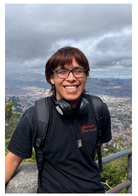
Sashi Juarez-Galindo is a Ph.D. student studying American politics and political methodology in the department of government and politics at the University of Maryland, College Park. His work focuses on race and ethnic politics, Latino politics, intersectionality, and public opinion in the United States. Juarez-Galindo’s dissertation looks to analyze how conflict among Latinos leads to the punishment of vulnerable groups within the community, particularly emphasizing how the intersection of different identities can lead to the exacerbation or circumvention of said punishment, and how tolerance can affect their political participation. Currently, he relies on experimental survey work to analyze how ingroup members will react to specific identities being switched. At the University of Maryland, he became involved in the Interdisciplinary Laboratory of Computational Social Science (iLCSS) and the Center for Democracy and Civic Engagement (CDCE). The APSA Latino Fund will be used to help field an original survey experiment that is set to be the first chapter of his dissertation.

Francy Luna Diaz’s research examines how information environments shape political attitudes and behavior, with a particular focus on Latino communities in the United States. Drawing on political communication, political psychology, and public opinion research, Diaz uses surveys, experiments, interviews, and computational analyses of social media data to study how transnational ties, social media, and misinformation influence political beliefs and participation. Her book-style dissertation develops a theory explaining how cross-border social ties and digital media shape how Latinos encounter and respond to political information. Her research has been supported by the NSF Graduate Research Fellowship Program, the APSA Dissertation Improvement Grant, the APSA Fund for Latino Scholarship, and other competitive fellowships, grants, and awards. You can read more about Diaz’s scholarship on her website at francylunadiaz.co

Giovanna Itzel is a Ph.D. candidate in political science at the University of California, Irvine, with graduate emphases in Chicano/Latino studies and feminist studies. Her research asks how immigration-impacted Latino college students define and participate in political life and argues that conventional measures often invisibilize this population in their answers. She offers the framework survival-based politics as an answer: a framework in which political engagement is necessitated by continuous threat rather than mobilized by episodic opportunity. Her dissertation builds the case through community-engaged, mixed-methods research conducted alongside the students whose lives it describes. Her work has appeared in Sociological Perspectives, the Journal of Hispanic Higher Education, and the Journal of Racial and Ethnic Health Disparities, among others, and has been supported by the UC HSI Doctoral Diversity Initiative, the Crossing Latinidades Mellon Fellowship, and the UC National Center for Free Speech and Civic Engagement, among others. She used the Latino Fund Scholarship to attend the 2026 APSA Annual meeting where she presented her first empirical dissertation chapter.

Sebastean Pujols is a Ph.D. student in political science and historical studies at The New School for Social Research in New York City. His academic interests center on imperial history and political ecology in the Atlantic more broadly, and in the Caribbean region in particular. Using a broad range of archival material, his work seeks to understand the politics of infrastructure development in Puerto Rico. He is particularly interested in the relationship between a rapidly industrializing sugar economy, the reorganization of the Archipelago’s hydrology, the accumulation of public debt, and U.S. geopolitical concerns in the region. The Fund for Latino Scholarship will help support Pujols’ data collection in the Puerto Rico General Archive and NARA (Washington and Philadelphia).

Niranjan Jose is a master’s candidate in International Law at the University of St. Gallen in Switzerland, where his research examines the development and operationalisation of Free, Prior and Informed Consent (FPIC) as a legal norm in the context of energy transition mineral mining in the Brazilian Amazon. His thesis traces FPIC’s evolution through the United Nations and Inter-American human rights systems since the 2007 UN Declaration on the Rights of Indigenous Peoples before testing its implementation through two case studies in Pará: Vale’s Onça Puma nickel mine and Glencore’s bauxite operations at the Mineração Rio do Norte mine. The APSA Fund for Latino Scholarship will support the completion of his fieldwork analysis, including the stakeholder interviews conducted during his three-month research stay in Brazil, as well as travel to present his findings at the FECAP Business School Jean Monnet Centre of Excellence on Business and Human Rights. Niranjan holds a bachelor’s degree in law and is currently an intern at the UN Office of the High Commissioner for Human Rights in Geneva.
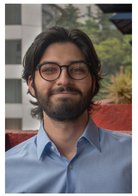
Máximo Navarro is a Ph.D. student in American politics in the department of government at Cornell University. His research focuses on the politics of race and ethnicity, specifically partisanship and public opinion in cities along the U.S.-Mexico border, alongside an interest in survey research and methodology. This focus is motivated by his experience growing up in commuting between Tijuana and San Diego, where he volunteered with binational NGOs dedicated to helping migrant communities. The APSA Fund for Latino Scholarship will support his ongoing research on how Latino group consciousness and partisanship vary across cities and regions.

Chris Flores is a PhD candidate in political science at Stanford University. Chris’ research broadly examines race, ethnicity, and political behavior in the U.S. using machine learning and causal inference techniques. Their dissertation focuses on the ethnoracial identities of Latinos, who make up one in five individuals in the U.S. and complicate prevailing understandings of race and ethnicity. Using surveys, interviews, and administrative data, their dissertation explores the multiple ways Latinos identify their race in the U.S., how and why these ethnoracial identities are linked to political attitudes, and how they are shaped by institutions and social movements. In other projects, they examine Latino partisanship and immigration attitudes, racial fluidity, and political campaign rhetoric on immigration and Latinos. The Fund for Latino Scholarship helped support their attendance at the 2026 APSA Annual Meeting.